

Re-imagine the Vision for the Australian Art Therapy Industry
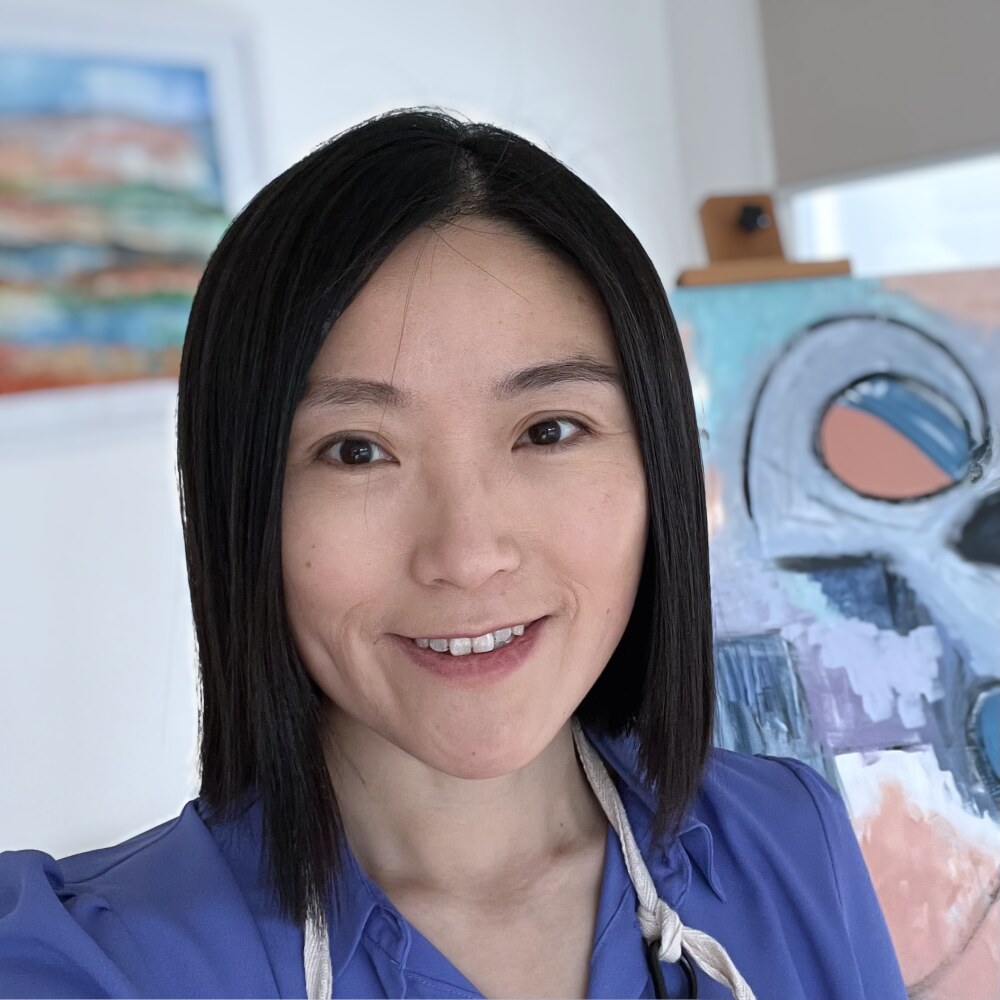
Kanling Juric
Art Therapist & Founder
Read Time: 6 minutes
10 August 2026
The Australian art therapy industry is in need of a clearer vision and a more strategic approach to enable the art therapy profession to grow and support the wellbeing of more individuals and communities. In a field full of committed and inspired individuals who were drawn to art therapy because they found their calling, the current state of the industry offers art therapists an insurmountable number of hurdles. Many art therapists are constantly facing the perpetual stress of unemployment, low or inequitable pay, and poor workplace treatment. While funding challenges, economic downturn, and the fact that creative therapies are still relatively new compared with more established fields such as psychology all play a role, there are things that are within the control of our profession and we need to do more.
Upon dealing with some extremely frustrating situations recently with various professional bodies and organisations (not pointing fingers), I reflected on the changes that are desperately needed in this sector: 1) Accountability; 2) Breaking Boundaries; and 3) Cohesion, Consistency and Collaboration.
In this article
Accountability
- Universities and educational institutions – Expand the focus beyond maximising student enrolment to also help create more job opportunities at an industry level. Consider the effect of a constant supply of “free” placement students cannibalising the already limited art therapy job market and develop more sustainable ways to enable graduate employability. Helping students to be more job-ready beyond the theories and clinical practices of art therapy by incorporating more practical curriculum content (e.g. business management).
- Professional membership organisations – As a self-regulated industry, several professional membership associations exist for art therapists. While each organisation may offer their unique benefits and contributions, sometimes the “relationship” with these organisations seems more transactional and compliance-driven. Professional membership organisations should take more accountability in the advocating for our industry and adopt a more proactive (rather than reactive) approach. For example, explore how Art Therapists can become a Protected Title similar to our counterparts in the UK and the US; and other allied health professionals in Australia (e.g. Occupational Therapists).
- Individual art therapists and practitioners – The magic of art therapy is often hard to quantify and measure. However, in order for our industry to demonstrate value and to be taken more seriously, we need to find ways to measure outcomes and use data-informed approach (qualitative and quantitative). Moreover, non-professional / non-qualified art therapists should seriously consider the ethics of practicing art therapy without appropriate training and qualifications, and move towards attaining the appropriate qualification.
Breaking Boundaries
- Moving beyond NDIS – While NDIS has enabled more art therapists to help participants through creativity, it is not the only basket and we should certainly not put all our eggs in it. For private practice practitioners, diversify your risk portfolio to minimise the impact that may be caused by a single regulatory change on your entire operation. For universities and professional membership associations, help us build more sector wide opportunities.
- Innovative thinking - Let’s explore ways to make the pie bigger rather than fight for the same slice of pie. Art therapists are creative thinkers, so why not use this strength to our advantage to find new contexts, settings, populations and ways we can practice art therapy.
- Breaking the stereotypes - We need to stop feeling small because art therapy is seeing as “less than” or “just art and craft”. We often feel like we need to work 100x harder to prove our value because art is taken less seriously than words. Art therapy is an evidence-based mental health profession drawing from numerous fields including but not limited to psychology, neuroscience and counselling.

Cohesion, Consistency and Collaboration
- University curriculums and entry requirements – A more standardised or consistent curriculum across different universities offering art therapy is long overdue. There should be a minimum body of knowledge comprising theoretical and practical elements to be covered by all master of art therapy degrees. Entry requirements to be admitted into such courses should also be reviewed and aligned across institutions.
- Professional membership associations and their requirements – While the existence of multiple professional associations is the reality, there are opportunities for more communication between these organisations to ensure better alignment of requirements, and ideally more collaboration to support the members and the industry. When governance becomes bureaucracy, it no longer serves the intended purpose.
- Collaboration over competition – Last but not least, as art therapists we need to stick together rather than compete with each other. Develop an infinite mindset and focus on growing our field as a whole. Share your experience, resources and knowledge with others – that’s our only way to stay connected and build a stronger future.
Taken together, there is a lot we can do collectively to uplift and expand our industry. Yet so many art therapists feel so helpless and stuck in their current positions. Admittedly, there are numerous constraints faced by all the aforementioned entities (universities, professional membership associations, workplaces, etc.) where they are equally bound by the limitations of the systems we operate within. But why not challenge the status quo and come together to establish a coherent vision for art therapy in Australia?
Building Our Collective Vision
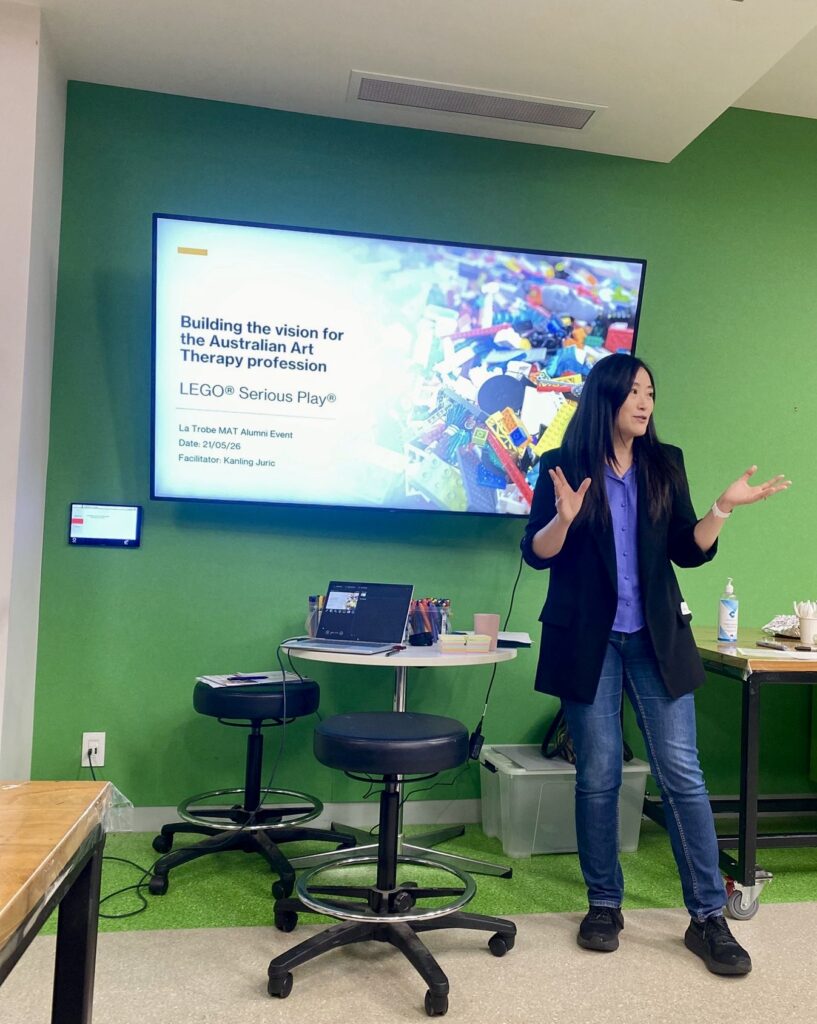
Earlier this year, I had the privilege of facilitating a vision setting workshop at the La Trobe University Master of Art Therapy inaugural alumni event. Using the Lego® Serious Play® method, a group of art therapy practitioners collectively built their vision for the Australian Art Therapy industry. During this workshop, I had the privilege to witness true passion, commitment, authenticity and hope. “We are stronger together” was one of themes that emerged repeatedly during the session.
This was one of the many Lego® Serious Play® vision setting workshops I intend to run, with the goal to gather the voices of professional and emerging art therapists, and other industry stakeholders such as universities, allied health practitioners, schools, professional associations, mental health organisations and more. The outcome will be synthesised into a collective vision for the Australian art therapy industry, and to inform a proposed strategic roadmap. If you would like to find out more, or be involved, please reach out via Contact Form.

Note: The above reflections are based on my personal experience and observations. This article is not intended to criticise any organisations; rather it offers a critical lens in thinking about the industry as a whole and some of its current challenges. This initiative is purely driven by my passion for art therapy. Participation is voluntary and there is no financial gain for myself or Cerulean Space Art Therapy .