Infographics
The following infographics have been developed to assist you to further your understanding of the practice of art therapy. All illustrations are original artwork by Kanling Juric.
Please note: All artwork and visual content on this website are protected by copyright and may not be used, copied, reproduced, or distributed in any form without prior written permission.
-
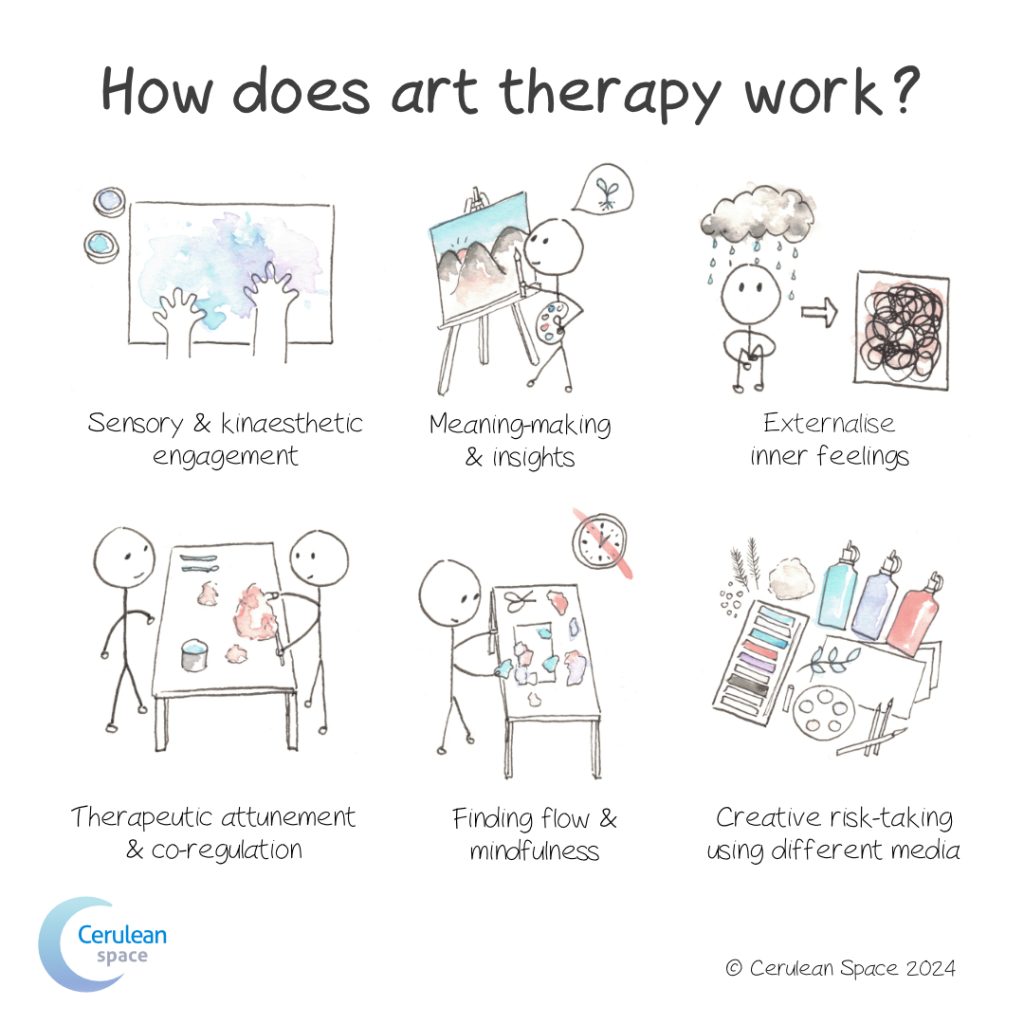
How does art therapy work
Ever wondered how art therapy works? Here are some core therapeutic factors of art therapy:
- Immersing in sensory and kinaesthetic interactions with art materials.
- Art making facilitating meaning-making and yielding insights.
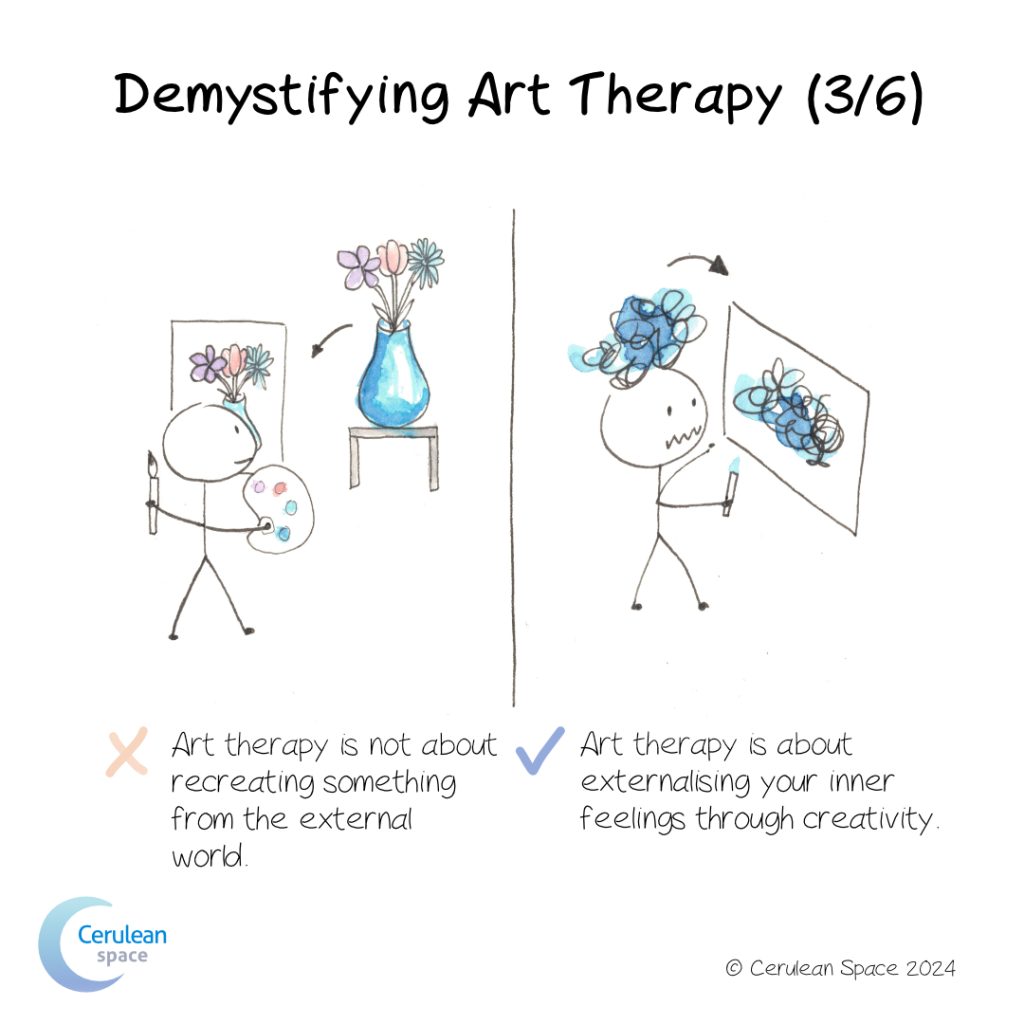
- Externalising inner thoughts and feelings that are difficult to verbalise.
- Being witnessed, co-regulated and supported by an attuned art therapist.
- Finding flow and mindfulness in the present moment through creativity.
- Engaging in creative risk taking through experimenting with different art media and art making activities.
-
Why use qualified art therapists?
As a qualified and registered art therapist, it always concerns me when I see or hear about non-art therapists offering art therapy. It is not the fear of “competition” that leads to my unease, but their serious potential to cause harm for the client. I have prepared this little diagram to highlight some of the things that could go wrong when an unqualified individual practices art therapy.
Art therapy in Australia requires master-level education (which includes 750 hours of clinical placement). To be eligible to apply for the master, one must have completed the relevant bachelor level education, two years of human services experience, and have had training in counselling. Post graduation, professional art therapists must keep up with continuous professional development and clinical supervision, and operate in line with the ethics code of the relevant professional bodies (eg. ANZACATA, ACA, PACFA). Art therapy is a profession!
I look forward to the day when Art Therapist becomes a protected title like in the UK. In the meantime, I will continue to work alongside my colleagues to deliver our work with high standard and integrity. And for those who are practicing art therapy without the appropriate qualification, perhaps you can channel your passion into obtaining an art therapy degree so we can continue to grow and advocate for the art therapy profession, while placing the client’s therapeutic needs and safety at the core of our work.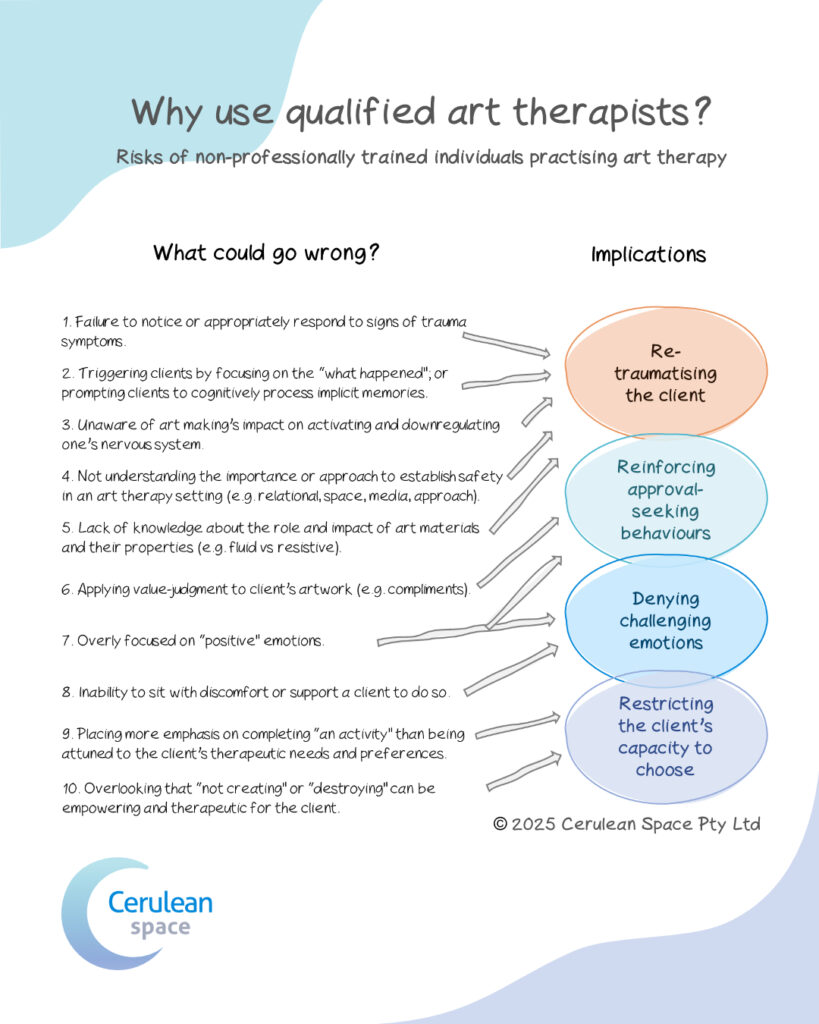
-
The realities of early career art therapists
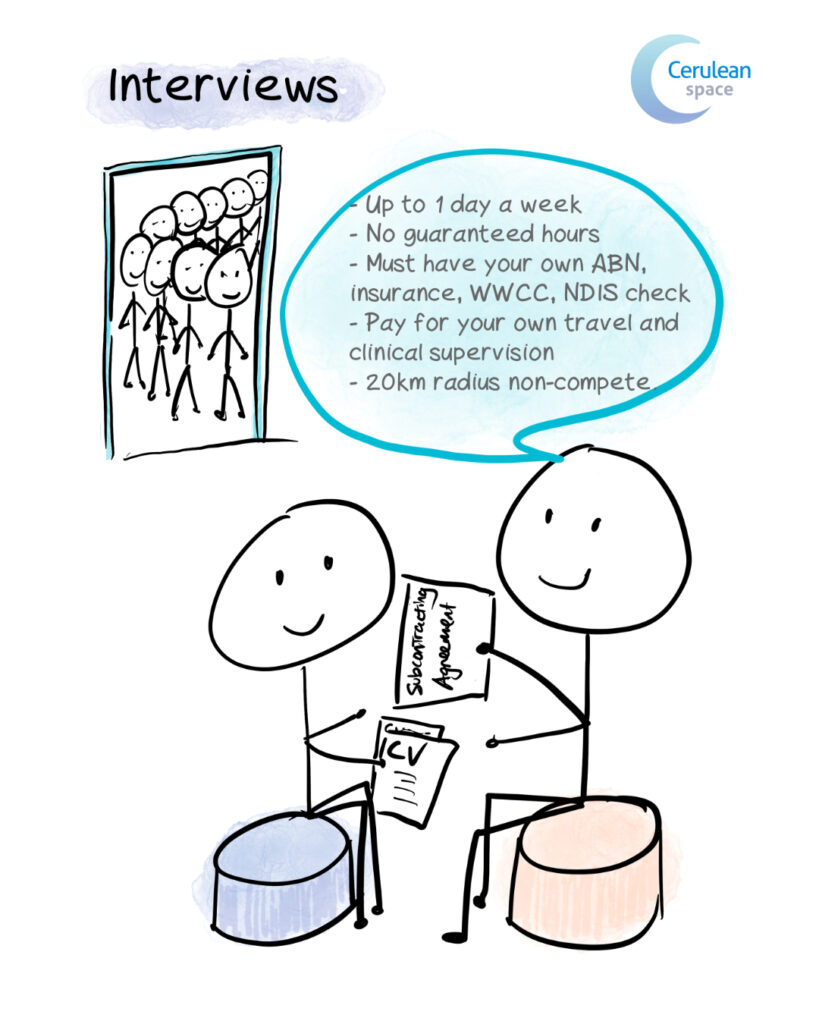
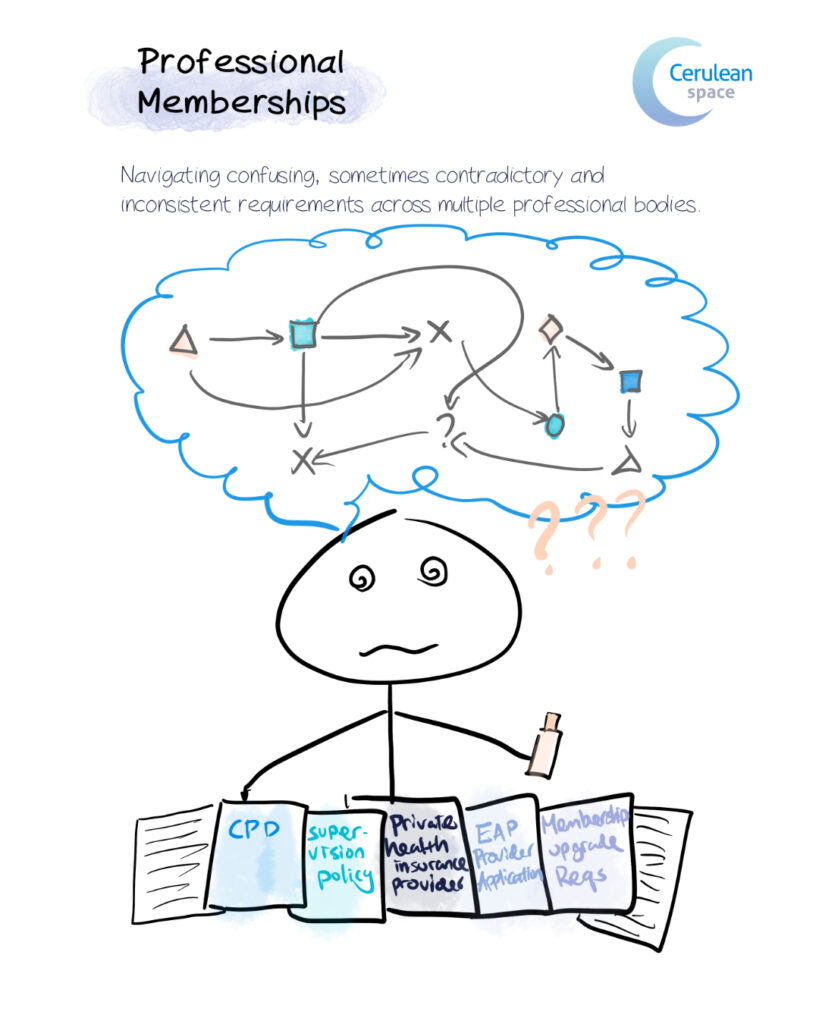
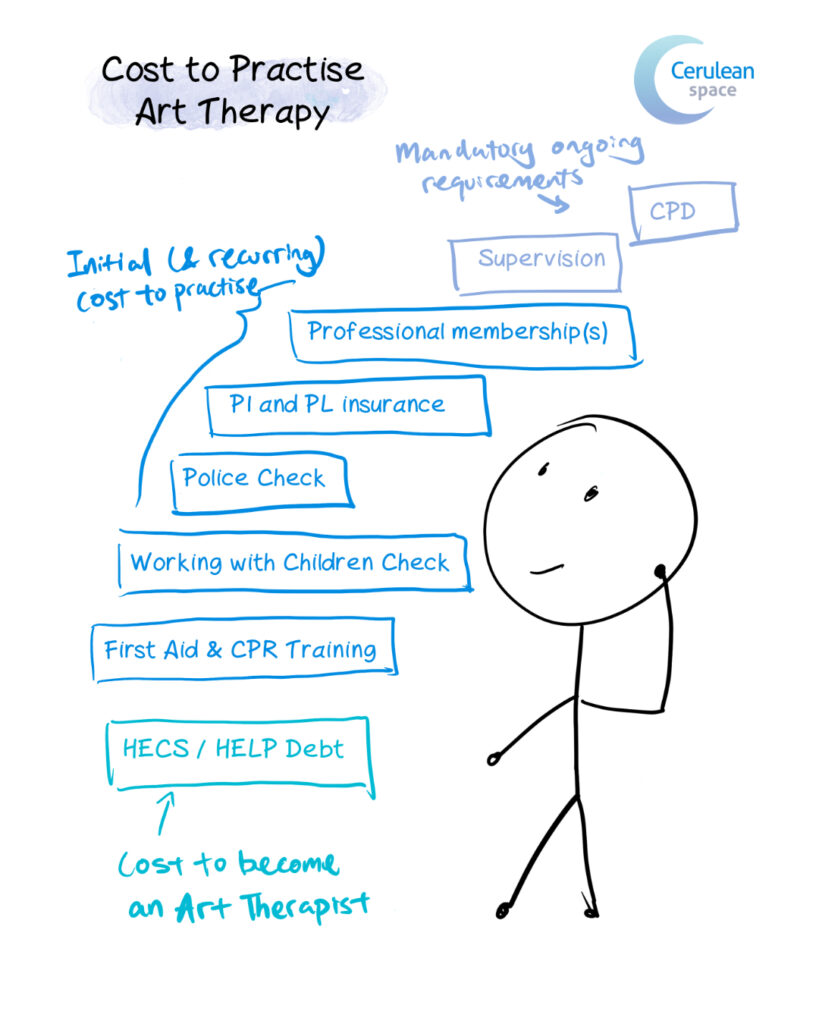
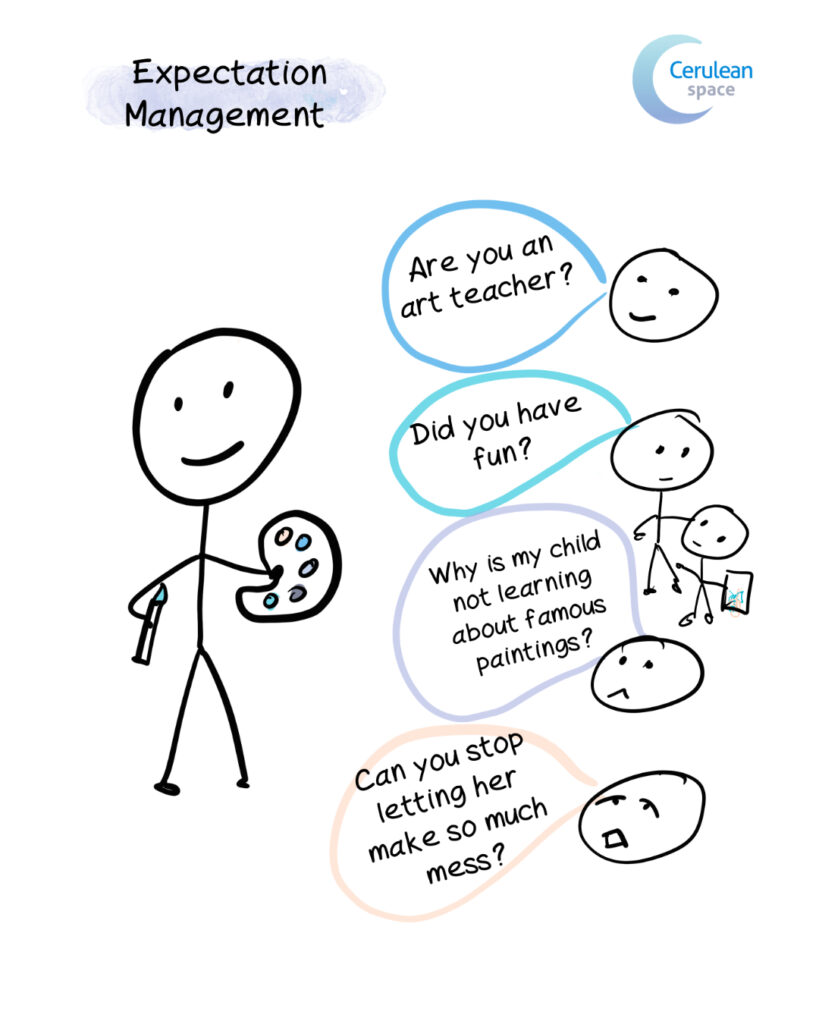
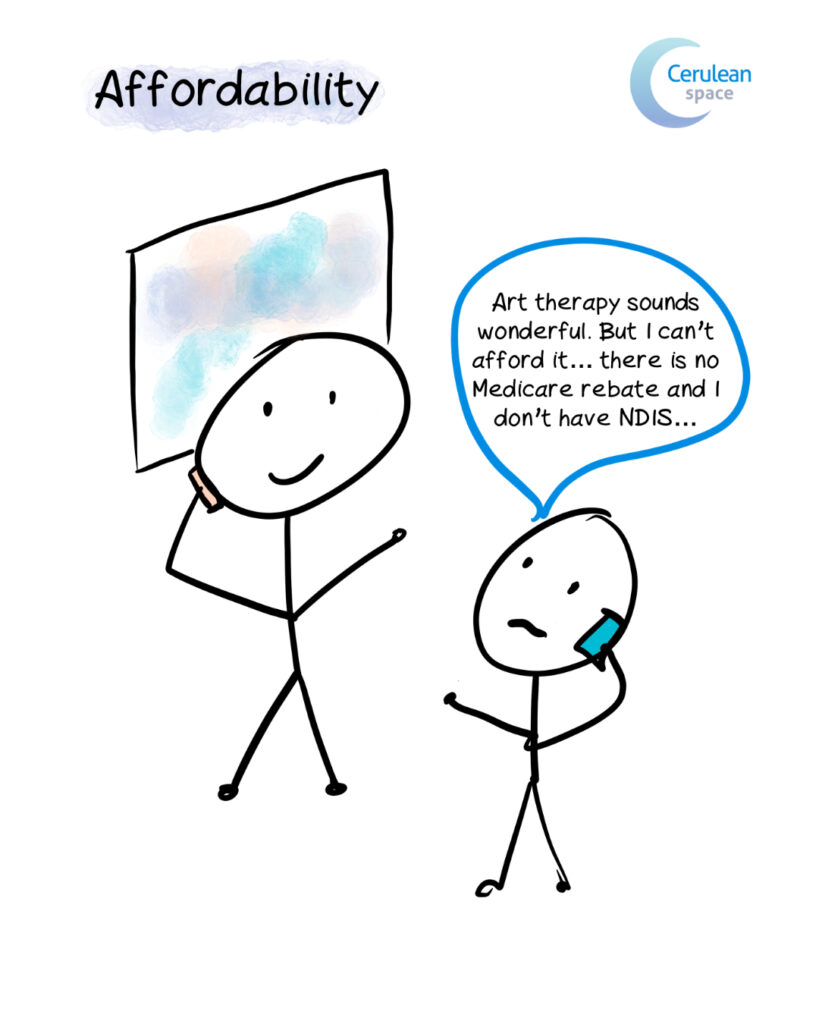
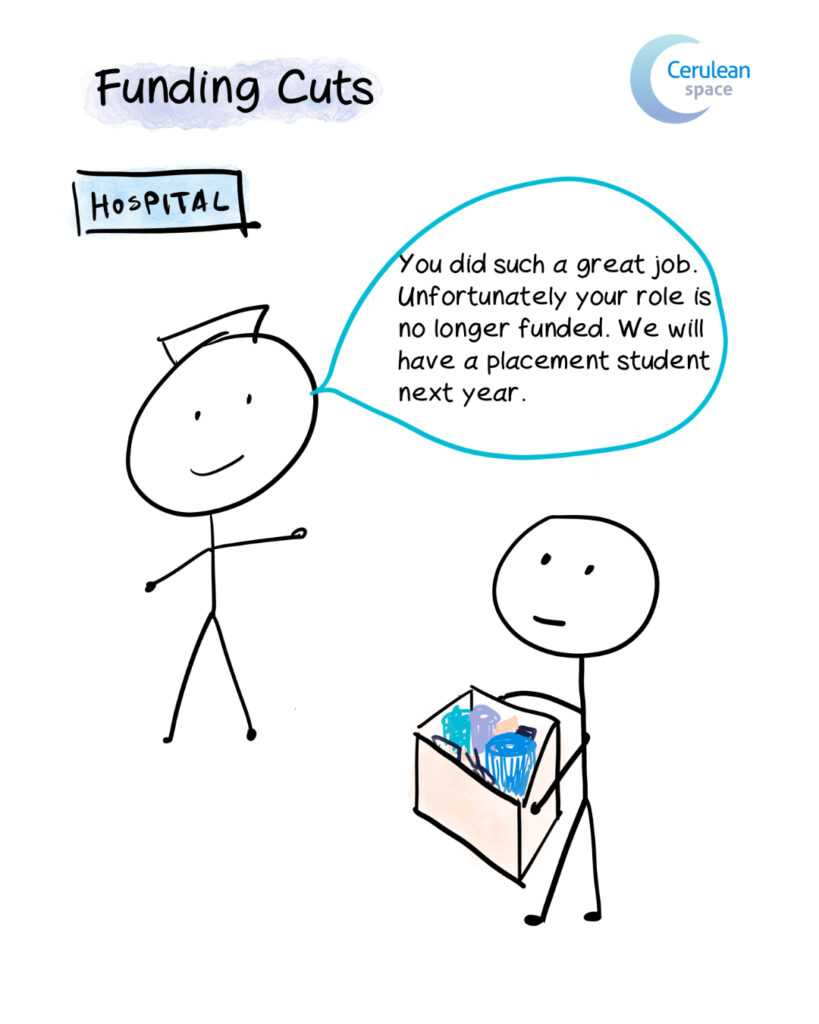
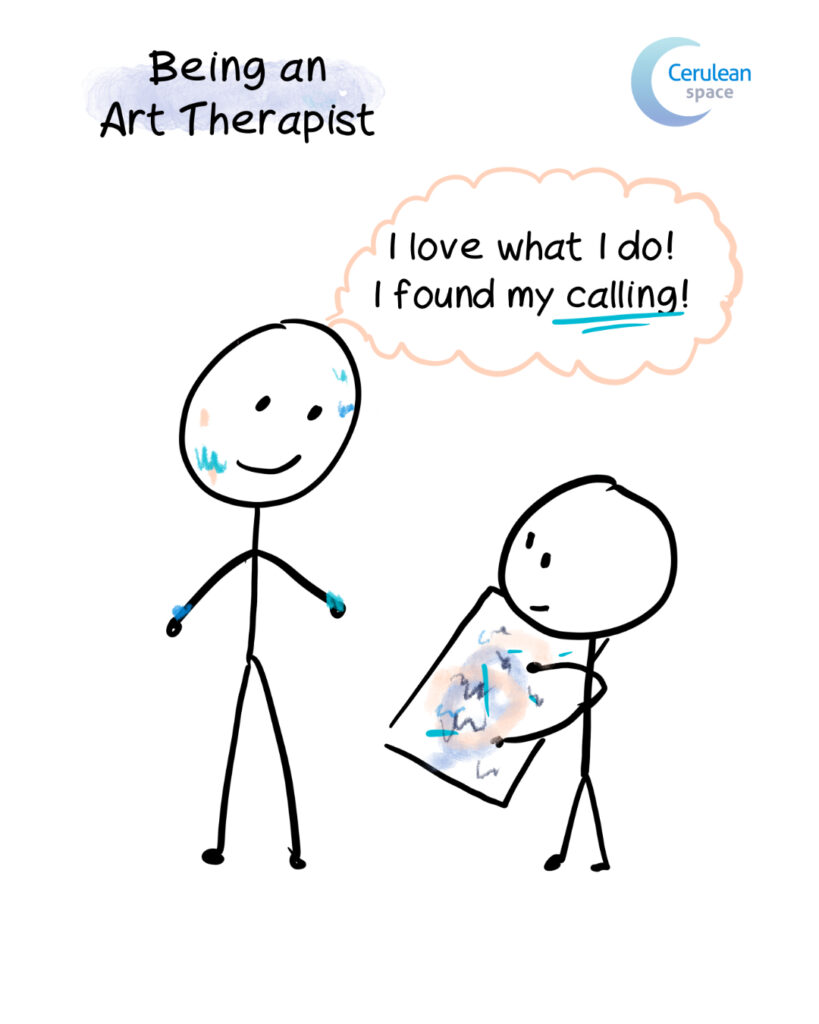
What is it like to be an early career art therapist in Australia? I created these illustrations to highlight the unfortunate stress and anxiety often experienced by many master-level art therapy graduates.
However, these illustrations neither intend to criticise individuals or organisations, nor to deter aspiring art therapists from entering the field. Instead,
- It’s an acknowledgement of how determined and tenacious art therapists are despite the challenges we have to overcome.
- It’s an expression of gratitude for being a part of this tribe of passionate individuals who are committed to helping others through empathy and creativity.
- It’s a call for action that we, as an industry, need to create more blue oceans and increase the size of the pie rather than fighting for the same slice (i.e. promote the awareness of art therapy, demonstrate our values and cultivate new opportunities).
Click on each of the following images to enlarge them.

-
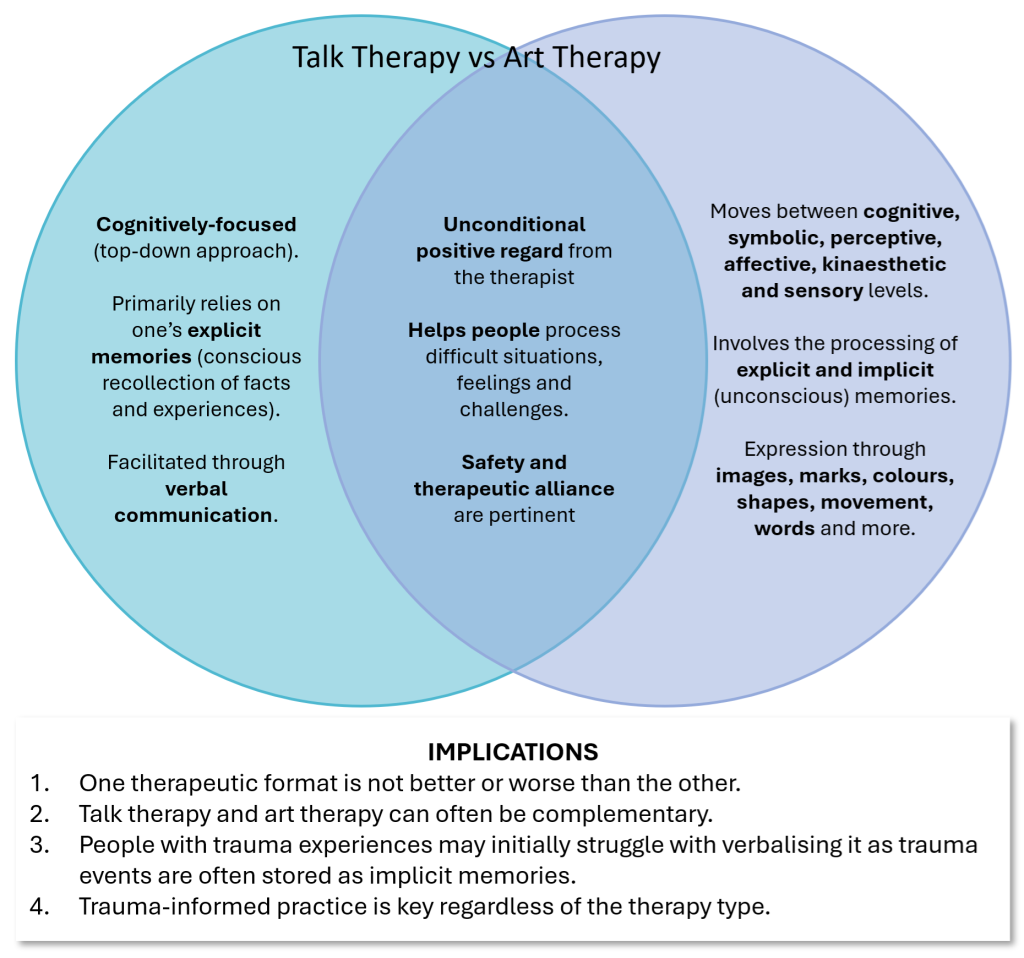
Art Therapy vs Talk Therapy
What are the similarities and differences between talk therapy and art therapy? And is one better than the other? On a personal level, as someone who have went through my own healing journey using art, I have also benefited significantly from talk therapy over the years. On a professional level, I have worked within interdisciplinary clinical settings and witnessed clients benefiting from the complementary nature of both talk therapy and art therapy. Ultimately, putting the client’s therapeutic needs first; providing them with authenticity and unconditional positive regard; and ensuring safety are fundamental across any therapeutic approaches.
-
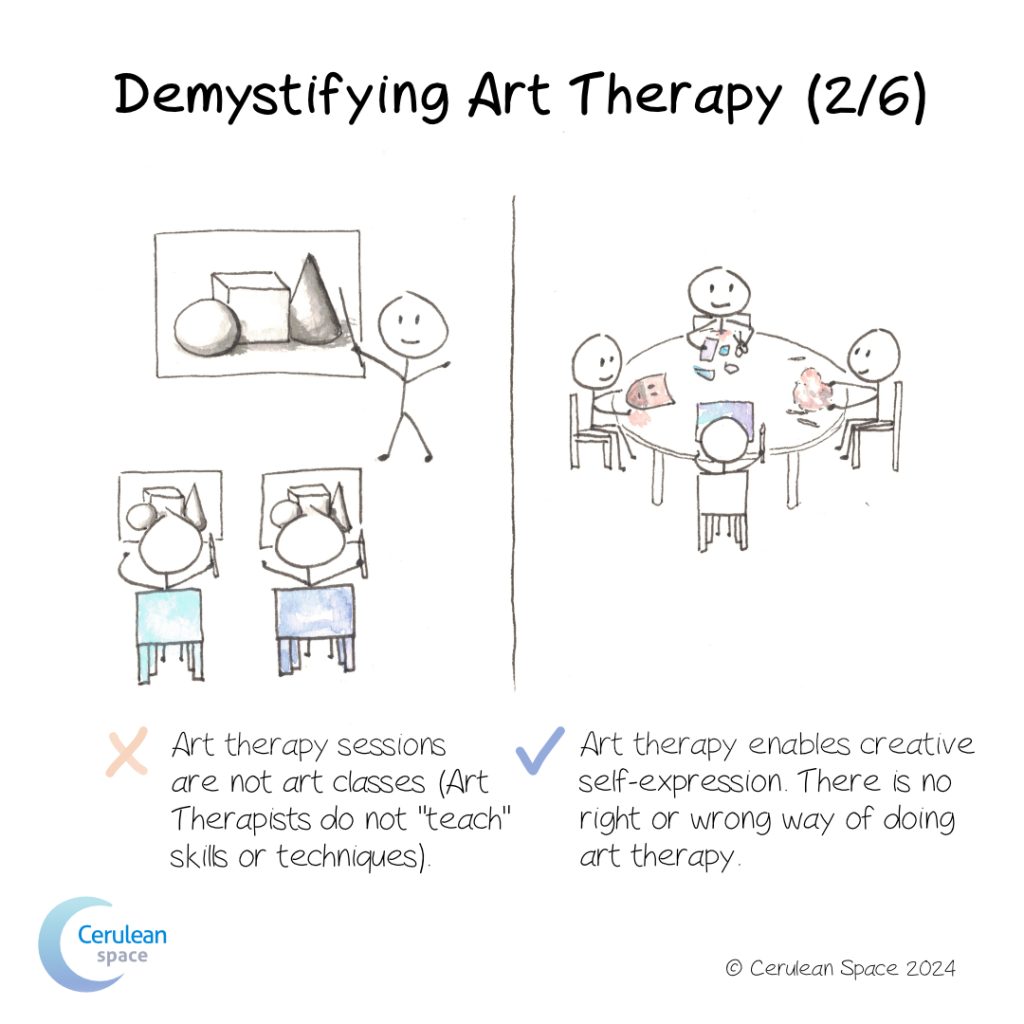
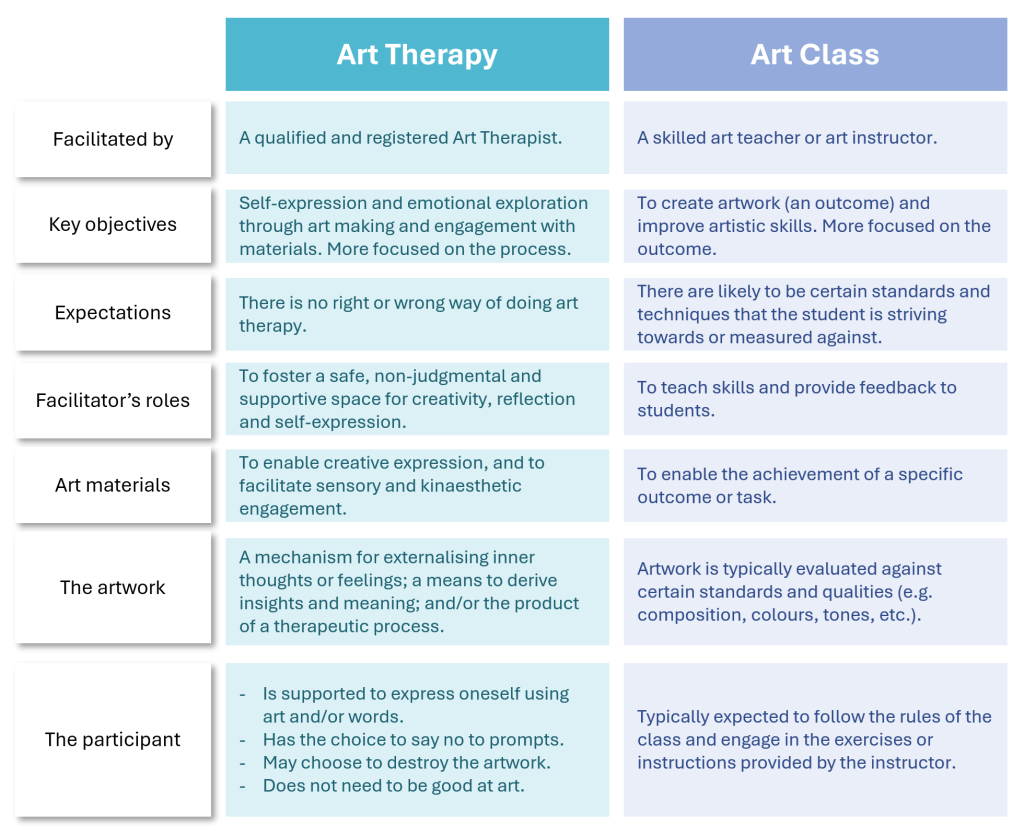
Art Therapy vs Art Class
Art therapy can often be mistaken as being similar to an art class. Especially when working with children, I sometimes have disappointed parents wondering why their child is not practicing a particular artistic technique, or learning about famous paintings. The table below outlines the key distinctions between art therapy and art class. So if your only goal is to improve your artistic skill, then art therapy may not be right for you.
-
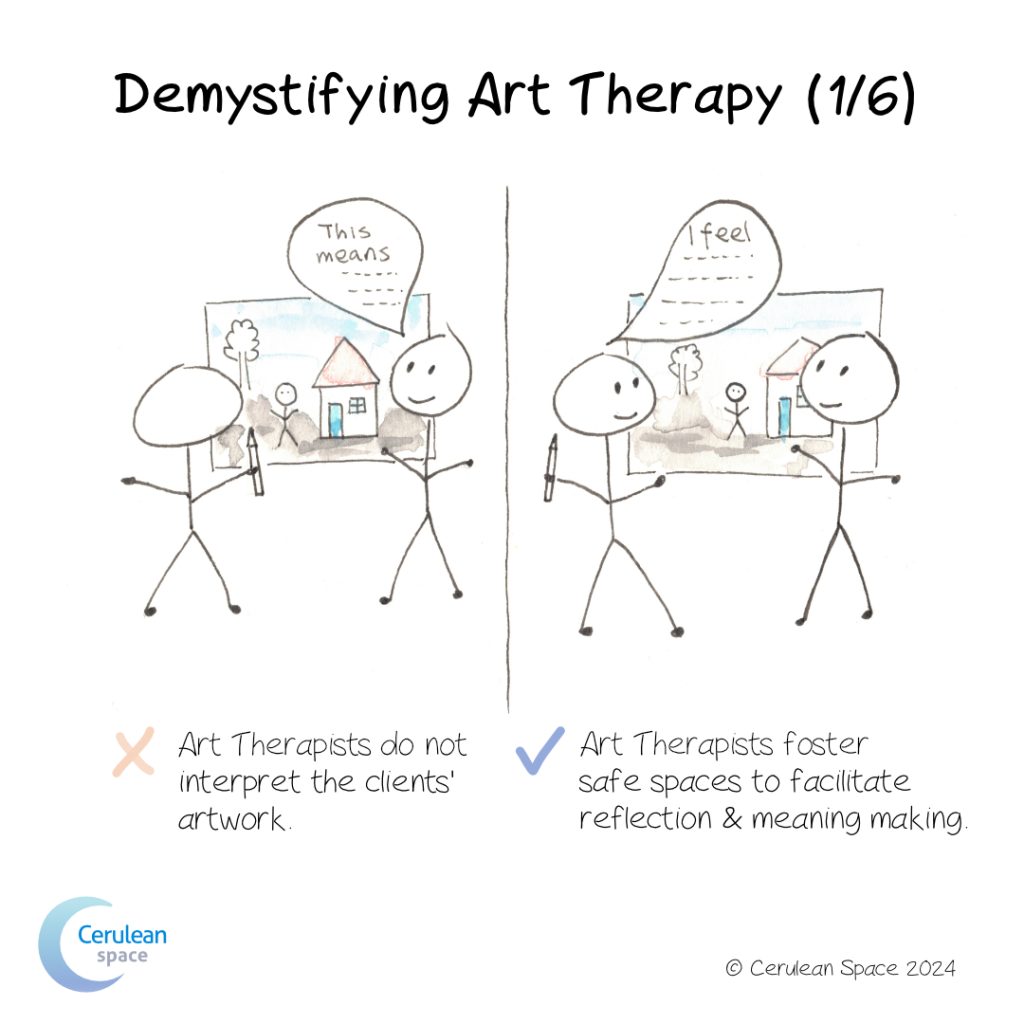
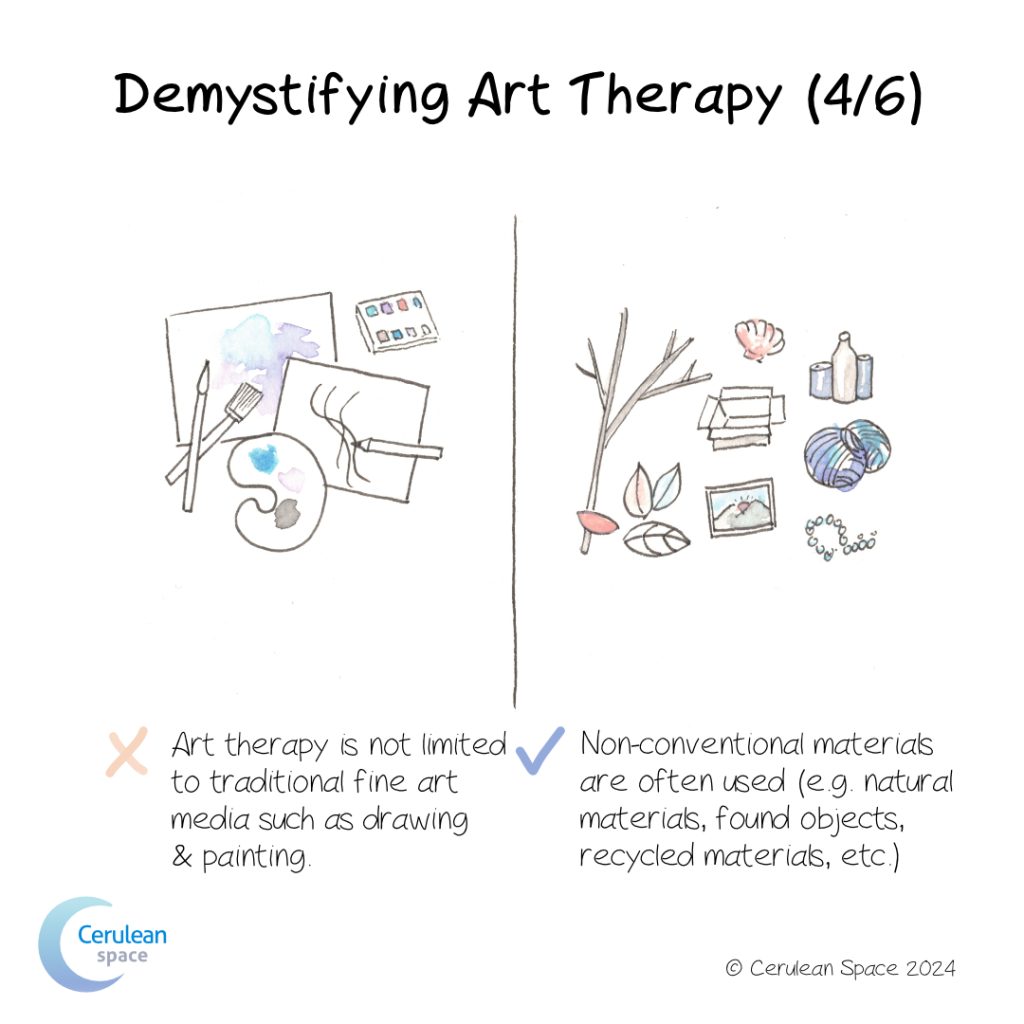
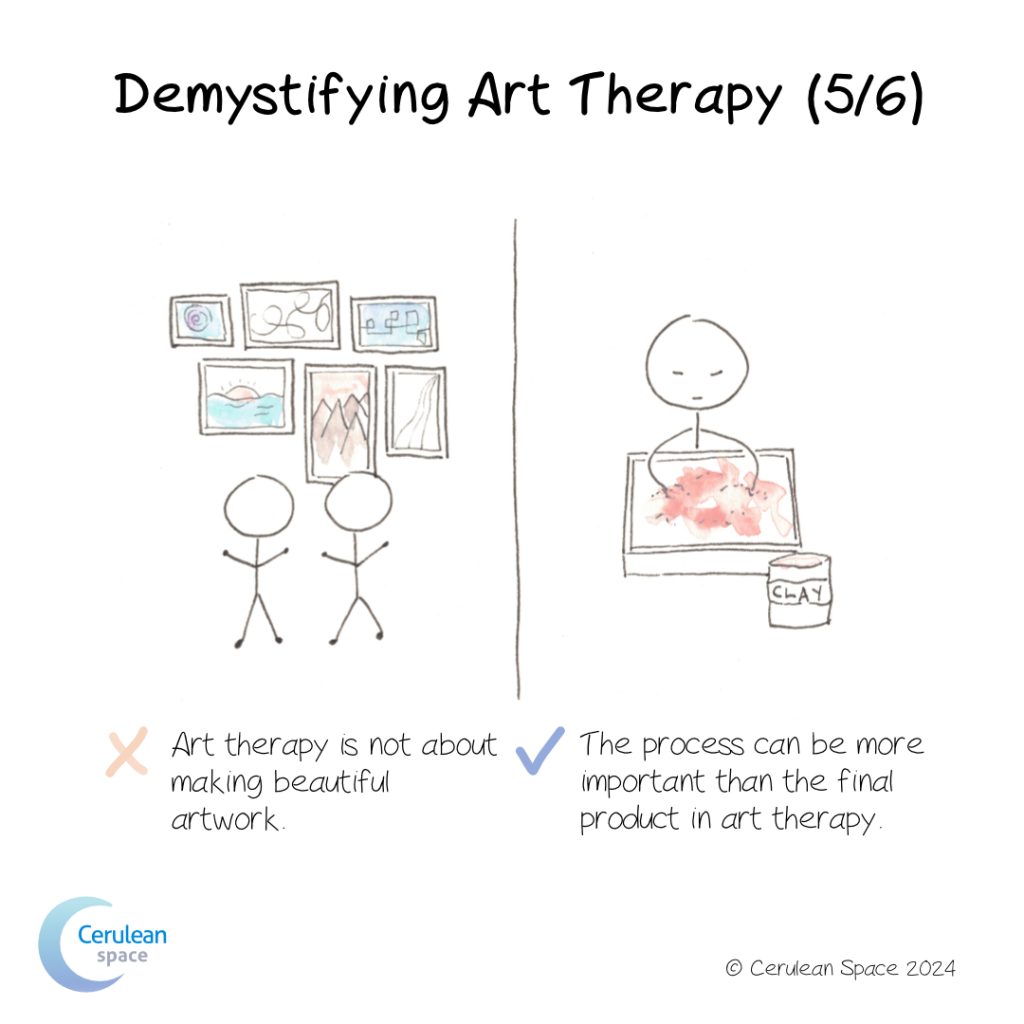
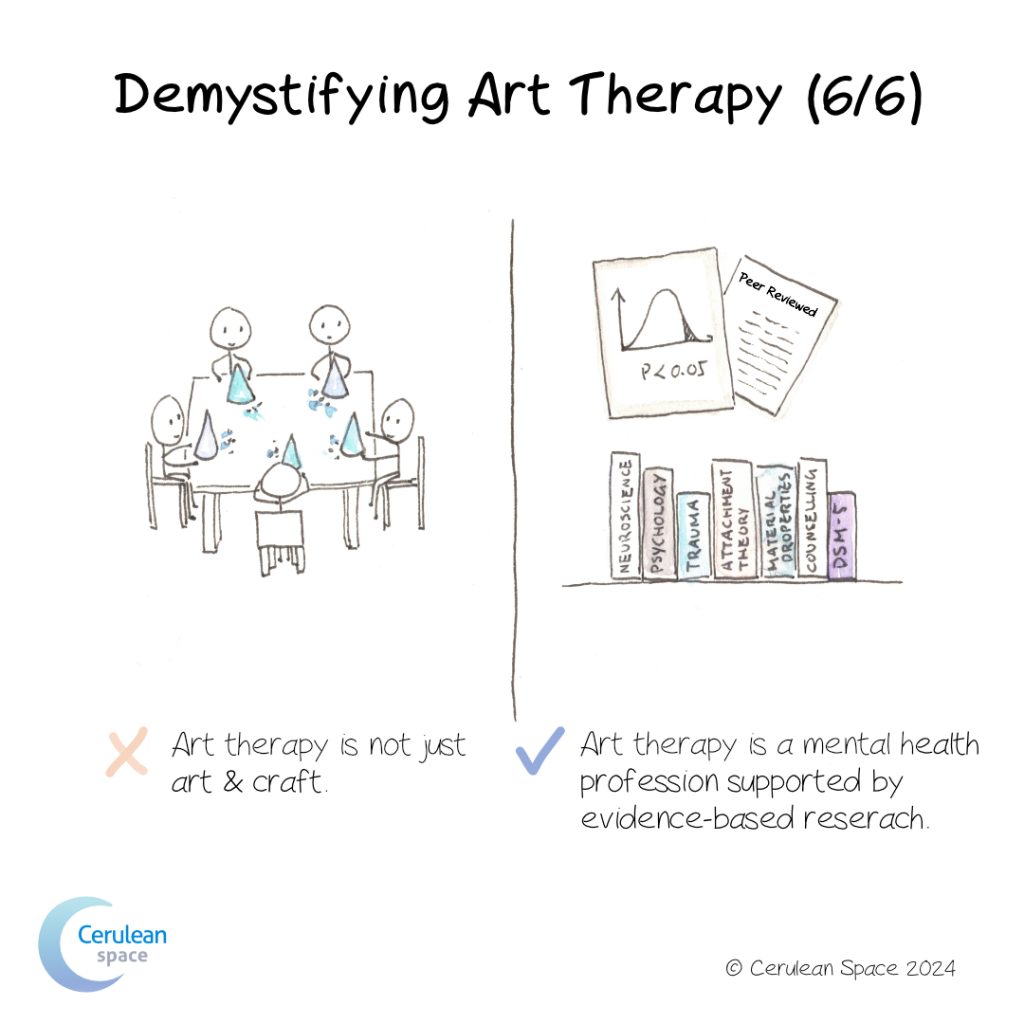
Demystifying Art Therapy
When I tell people that I am an Art Therapist, one of the most common responses I get is “so do you interpret people’s drawings?” The answer is no. An art therapist’s role is to foster a safe space for the client to create, reflect and generate insights that may emerge from the artwork, the process, and/or the dialogue with the therapist. In light of the many common myths about art therapy, I have created a this “Demystifying art therapy” series, hoping to share with the world what art therapy is all about.
Click on each of the following images to enlarge them.